Home-Cage Monitoring: The Night Shift We Never See
Posted on October 14, 2026
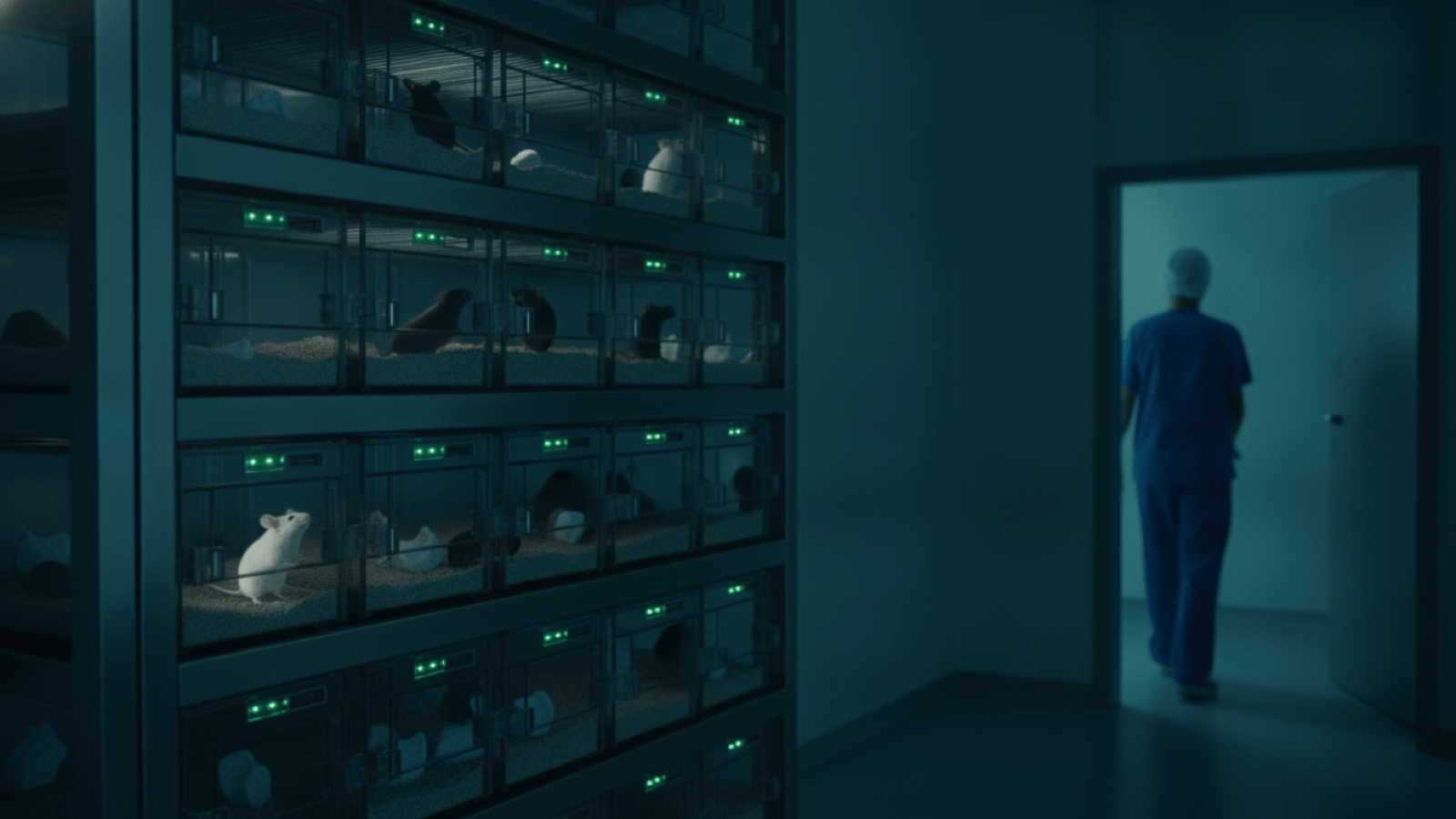
Mice do most of their living after the lights go off and the last technician goes home. Continuous monitoring is how the field is starting to see that half of the day. Here is what it shows, what it can’t do yet, and what to ask before it goes on your racks.
The vivarium runs a day shift. Cage changes, weights, health checks, dosing and most behavioral testing happen somewhere between seven in the morning and four in the afternoon, because that is when the people are in the building.
The animals keep a different schedule. A mouse is nocturnal, so the hours we spend with it are, from its side, the middle of its rest period. Most of us know this. Fewer of us have thought hard about what it does to the data, or about the twelve hours a day we never observe at all. Home-cage monitoring is starting to change that.
A nocturnal animal on a day-shift schedule
When a group at West Virginia University pulled the 25 most-cited papers in each of several behavioral neuroscience fields, the studies that did report timing mostly tested during the day. Over half of the 200 articles either left the time of testing out or described it too vaguely to use.1
That matters because time of day changes results. The same review points out that rodents become more sensitized to cocaine when they get it in their light phase than in their dark phase. A dose is not the same dose at 10 a.m. and at 10 p.m.
The researchers building home-cage systems make the same point from the other direction. A 2023 systematic review of the field notes that when nocturnal animals are observed for only a few hours, often during the light phase, valuable information may be missed.2 (We looked at the light itself in our lab lighting post. This one is about when we look.)

What home-cage monitoring has already shown
It records animals in their own cage, around the clock, without anyone opening it. Some systems use capacitive sensors mounted under the cage, some use video, and some use RFID to follow individual animals. A few results show what that buys you.
- A cage change is not a neutral event. A study recording group-housed C57BL/6J mice 24/7 at three sites (Rome, The Jackson Laboratory in Bar Harbor, and Stockholm) found that a cage change produced a marked activity response lasting hours in females and several days, day and night, in males. The same study found that apparently minor local differences between facilities produced significant behavioral differences between sites.3
- Some rhythms run longer than most studies. Using 14 to 19 months of continuous recordings, the Stockholm group found C57BL/6 mice under constant conditions cycling through an activity oscillation of roughly two to four months, about 97 days on average, with activity at the peaks averaging 65 percent higher than at the lows. The cycles weren’t synchronized between cages, and the authors flag the swing as a potentially serious confounder if nobody knows it is there.4
- The basics are measured well. An Oxford evaluation of a capacitive home-cage system found it accurately detected circadian period, circadian disruption, phase shifts and clock-defective mice, comparable to running wheels for all but the subtlest phenotypes.5
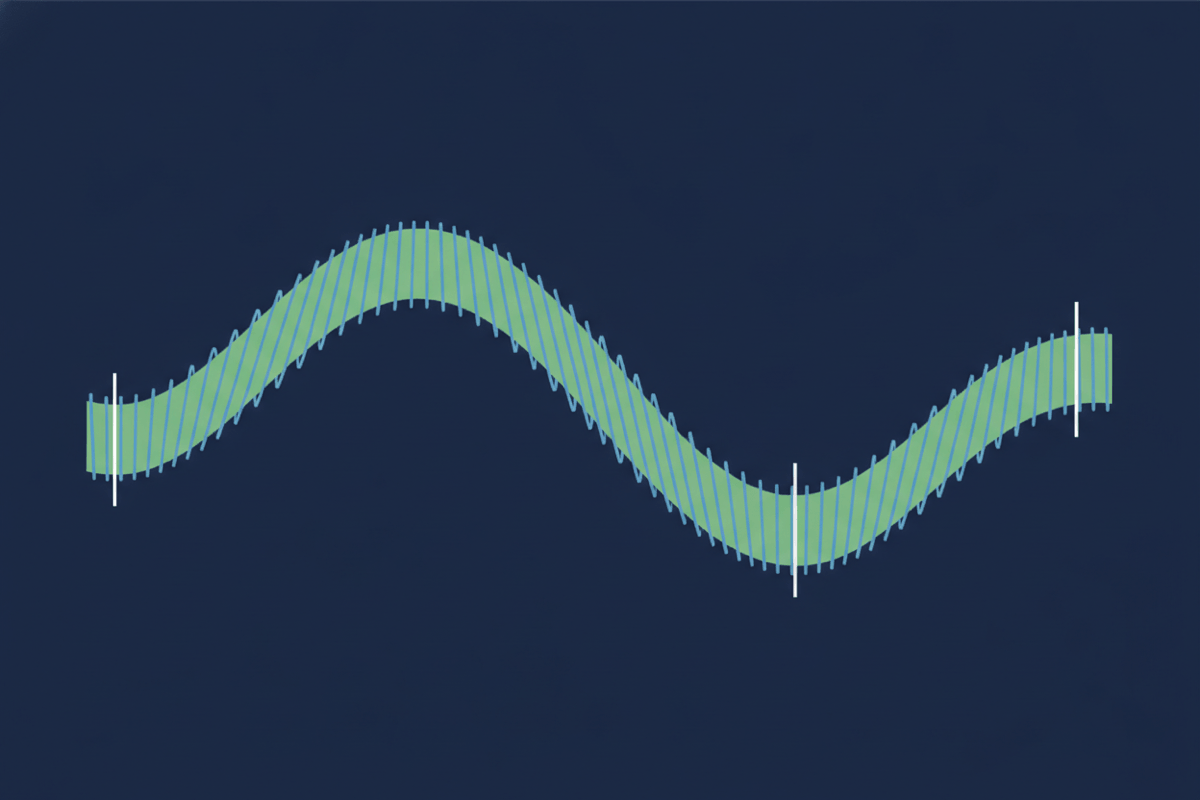
The second finding is the uncomfortable one. Take a baseline in week two and an endpoint in week eight, and part of the difference may be the animals’ own slow rhythm, which no daytime spot check would ever reveal.
Where the field is heading
The literature has grown quickly. The same systematic review, covering 521 publications, found that home-cage monitoring papers grew about 26-fold in number between 1974 and 2020, and about 7-fold as a share of all research output, with automated recording steadily replacing manual observation since the 2000s.2
The welfare case is growing alongside the science. A European research network on the topic, COST Action TEATIME, argues that continuous monitoring could catch early, subtle signs of distress or disease that a brief daily check misses, and support better-defined humane endpoints. It is equally clear that the tools should complement the technician’s judgment, not replace it.6
What it can’t do yet
The strong results above share a pattern. They describe the cage, or an animal living alone. The harder problems sit at the level of the individual animal in a group.
| Signal | Where it stands today | Source |
|---|---|---|
| Activity, rest and circadian rhythm | Measured well; tracks running wheels for period and phase shifts | Tir et al. 2025 |
| Response to husbandry (cage change, handling) | Visible and repeatable across sites, if the events are logged | Pernold et al. 2019 |
| Which animal did what, in a group cage | Still hard. Most published work single-housed the animals | Kahnau et al. 2023; TEATIME 2025 |
| Brief or subtle signs (grimacing, seizures) | Limited sensitivity to subtle or short-lived events | Tremoleda et al. 2026 |
| The data itself | Video runs to terabytes; needs a storage and review plan | TEATIME 2025 |
Read down the middle column. The solid rows are about the cage as a whole. The weak rows are about the individual animal and the rare event.
In the systematic review, 57 percent of studies housed animals individually, and 61 percent used males only, though group housing and both sexes became more common after 2011.2 The TEATIME welfare group calls telling apart group-housed, indistinguishable animals an unaddressed challenge, and asks for transparent validation of commercial systems before they go into research pipelines.7 Even the Oxford circadian evaluation single-housed its mice, and it concluded that the system’s cost suits core facilities better than individual labs.5
Before it goes on your racks
→ What this means for your lab. Start with what costs nothing:
- Record the clock time of every test, dose and check, and put it in the methods.
- Keep procedures at a consistent time relative to lights-off, not just “in the morning.”
- Log cage changes, weighings and room entries as events. A monitoring trace is hard to read without them.
If you are evaluating a system, a few questions sort the useful from the expensive:
- Does it report per cage or per animal? If per animal in group housing, how is each animal identified, and how often does it lose track?
- Validated against what, and in what housing? A single-housed validation does not automatically carry over to a cage of four.
- Who looks at the overnight data, and what triggers an alert?
- Where does the data live, who owns it, and how long is it kept?
- What changes in husbandry? Charging, light schedules and cage-change handling all shift with some systems.
The takeaway
The data we collect is shaped by when we are in the room. Home-cage monitoring won’t fix that by itself, but it is the first tool that lets a facility see the hours it has been missing. Write down the clock first. Then decide how much of the night you need to see.
Where we sit on this. RapID Lab makes machine-readable 2D-barcode ear tags for identifying research rodents. Individual identification is one of the open problems for group-housed monitoring, so where this field goes touches what we make. We don’t make monitoring systems, and none of the studies cited here used our tags. The day-shift problem holds no matter how an animal is identified.
References
- Nelson, R. J., Bumgarner, J. R., Walker, W. H., & DeVries, A. C. “Time-of-day as a critical biological variable.” Neuroscience & Biobehavioral Reviews 127 (2021): 740–746. PMC8504485
- Kahnau, P., Mieske, P., Wilzopolski, J., et al. “A systematic review of the development and application of home cage monitoring in laboratory mice and rats.” BMC Biology 21 (2023): 256. PMC10642068
- Pernold, K., Iannello, F., Low, B. E., et al. “Towards large scale automated cage monitoring: Diurnal rhythm and impact of interventions on in-cage activity of C57BL/6J mice recorded 24/7 with a non-disrupting capacitive-based technique.” PLOS ONE 14(2) (2019): e0211063. PMC6361443
- Pernold, K., Rullman, E., & Ulfhake, B. “Major oscillations in spontaneous home-cage activity in C57BL/6 mice housed under constant conditions.” Scientific Reports 11 (2021): 4961. PMC7925671
- Tir, S., Foster, R. G., & Peirson, S. N. “Evaluation of the Digital Ventilated Cage® system for circadian phenotyping.” Scientific Reports 15 (2025): 3674. PMC11779816
- Tremoleda, J. L., Brønstad, A., Potschka, H., et al. (TEATIME Animal Welfare Subgroup). “Challenges and expectations on the use of automated home cage monitoring for advancing laboratory animal care and welfare.” Laboratory Animals 60(1) (2026): 25–30. PMC13031348
- COST Action TEATIME CA20135 welfare group. “Advocating for automation in animal research: using home cage monitoring to advance welfare, reproducibility and scientific openness.” Disease Models & Mechanisms 18(10) (2025): dmm052669. PMC12598919